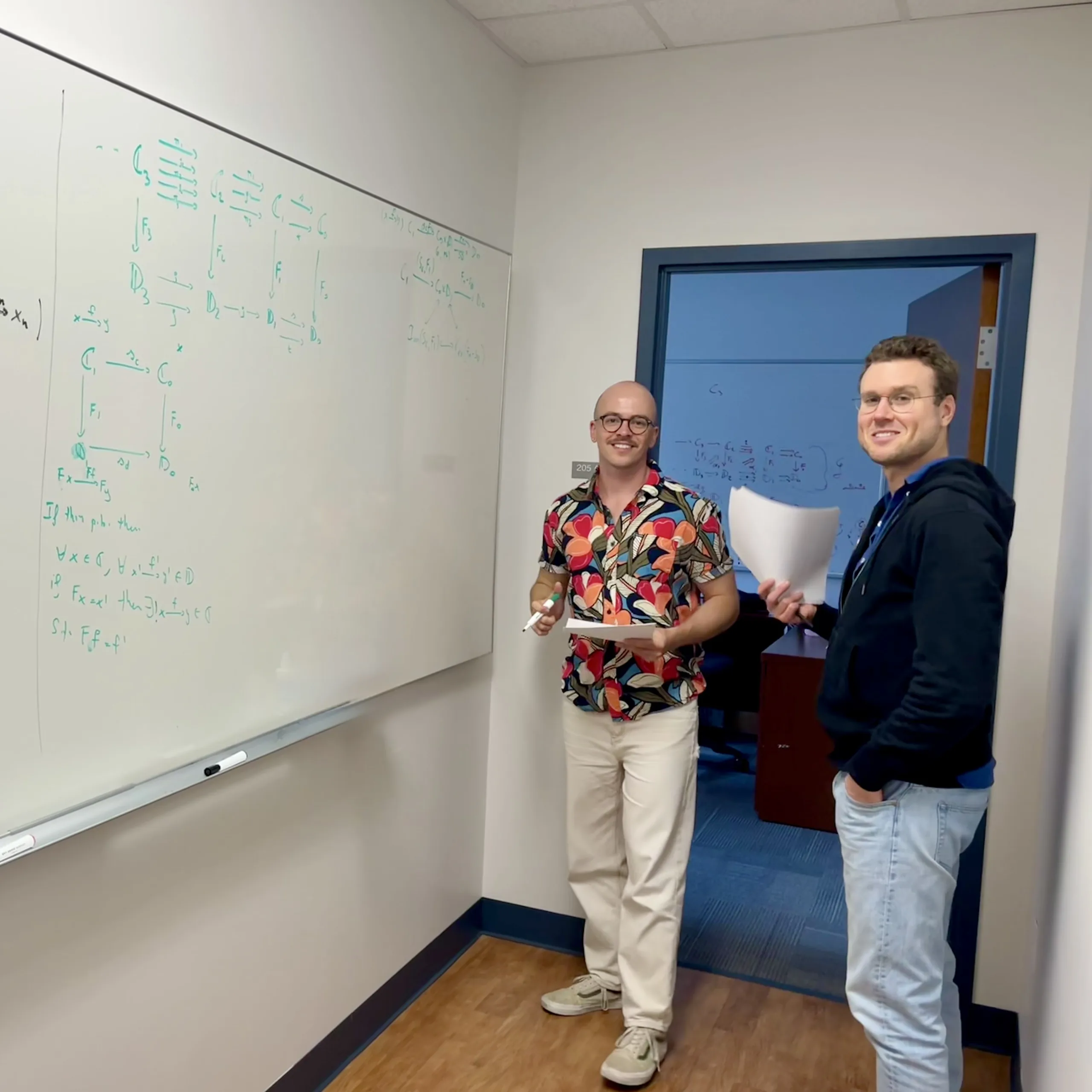
The members of the lab come from diverse perspectives with unique training. We
are always looking for students and researchers with a desire to solve problems
by leveraging abstract applications in novel science and engineering
applications.
Accepting applications for
PhD Students in both MAE
and CISE.
Mathematically minded students would benefit from the MAE degree program
specializing in Dynamics, Systems, and Control.
For MAE applicants, the GATAS lab is particularly well suited to students
interested in either Dynamics, Systems, and Control for optimization and
dynamics projects or Computational Fluid Dynamics
(CFD) for the Decapodes project.
For CISE students, the GATAS lab is a good fit for students interested in
High Performance Computing (HPC), Machine Learning, Data Science, Applied
and Computational Mathematics, Computer Algebra, and Programming Language
Theory.
Research Projects for Undergraduates and Graduate Students in MAE, CISE, and Math
Research Scientists and Postdocs in MAE, CISE, and Math
Email fairbanksj [at] ufl [dot] edu for all new position inquiries
If you are interested in a career in Applied Category Theory or Computational
Science and Engineering, please reach out.
Research Scientist at the Georgia Tech Research Institute
Caroline Rogers
Industry
Rebecca Boes
Industry
James Eschrich
PhD Student at University of Illinois (UIUC)
Taylor Frederick
Industry
Patrick Stokes
GatorSense Lab at UF ECE
Lab mentees
These are people who might not have spent full-time employment in the lab, but
were involved in a mentorship program or ongoing mentoring relationship outside
beyond the institution.
James Fairbanks is an assistant professor in the department of Mechanical and
Aerospace Engineering, and affiliated with the Institute for Computational
Engineering, and the Florida Institute for National Security.
My research focuses on new paradigms in scientific computing, specifically
applied category theory. This approach to mathematical modeling focuses on
structure and structure preserving relationships between mathematical objects.
The GATAS lab studies these topics and supports software-focused research in the
AlgebraicJulia Ecosystem. We collaborate closely across the HWCOE and with
external collaborators at NIST, AFRL, and the Topos Institute.
George Rauta
Program
CISE
Degree
PhD
Status
Starting
Lab member since
2022
George Rauta is a PhD student with a focus in numerical linear algebra and
high-performance computing.
I believe that advances in the field of computer science are dependent on the
existence of a highly performant computational foundation. It is critical that
this foundation considers the theoretical aspects of algorithms, the method by
which they are implemented in code and how they interact with the physical
designs of modern processing and memory units.
Richard Samuelson is a doctoral student researching category theory, convex
analysis, and high-performance computing. He has made significant contributions
to the CliqueTrees.jl
package, implementing the ChordalLDLt multifrontal factorisation that underpins
sparse symmetric positive-definite linear solves. These improvements accelerate
nullspace and global-section computations in the
CellularSheaves.jl
library and enable more efficient compositional methods across the lab’s
projects.
Selected publications
Graphical Quadratic Algebra – ICTAC 2025 (Lecture Notes in Computer
Science). Dario Stein, Fabio Zanasi, Robin Piedeleu, and Richard Samuelson.
DOI:
10.1007/978-3-032-11176-0_18
A Categorical Treatment of Open Linear Systems – Logical Methods in
Computer Science, 2025. Dario Stein and Richard Samuelson. DOI:
10.46298/lmcs-21(3:11)2025
Joana Bou Barcelo is a PhD student in the Department of Mechanical and
Aerospace Engineering at the University of Florida, working at the boundary
between the GATAS Lab’s compositional methods and nonlinear control.
Her work applies cellular sheaves to coordination problems in multi-agent
systems. In Heterogeneous Multi-Agent Multi-Target Tracking using Cellular
Sheaves, written with Tyler Hanks, Cristian
F. Nino, Austin Copeland, Warren Dixon, and James Fairbanks, the team poses the
tracking of several unknown targets as a harmonic extension problem on a
cellular sheaf. Because a sheaf can carry a different stalk over each agent,
the formulation handles agents whose state spaces have different dimensions —
the heterogeneity that makes these problems awkward to write down in the usual
graph-Laplacian setting. The resulting decentralized controller is built from
the sheaf Laplacian and comes with Lyapunov-based stability guarantees.
She presented this work as Heterogeneous Multi-Agent Multi-Target Tracking at
the INFORMS Optimization Society Conference in Atlanta in March 2026.
Selected publications
Heterogeneous Multi-Agent Multi-Target Tracking using Cellular Sheaves.
Tyler Hanks, Cristian F. Nino, Joana Bou Barcelo, Austin Copeland, Warren
Dixon, James Fairbanks. To appear, IEEE.
arXiv:2512.24886
Itay Kadosh is a PhD student in the Department of Mechanical and Aerospace
Engineering at the University of Florida. His research interests are robotics,
computer vision, and optimization.
Before joining UF he studied computer science and applied mathematics at the
University of Texas at Dallas, where he worked in the Intelligent Robotics and
Vision Lab on autonomous exploration and semantic mapping. That work built a
robot that maps an indoor environment once and then keeps only the semantic
object layer up to date on later visits, so it can track how objects move and
change over time without remapping the geometry.
Selected publications
Build Once, Monitor Continuously: Persistent Semantic Mapping via
Autonomous Exploration and Open-Vocabulary Object Updates. Sai Haneesh
Allu, Itay Kadosh, Tyler Summers, Yu Xiang.
arXiv:2409.15493
Samuel Cohen
Status
Undergraduate researcher
Lab member since
2024
Samuel Cohen is an undergraduate studying math and computer science.
My work is implementing distributed optimization algorithms in the
AlgebraicOptimization.jl package. This package uses the framework of category
theory to exploit naturally occurring compositional structures in various
optimization problems.
Matt Cuffaro
Role
Research Software Engineer
Status
Crushing it
Lab member since
2023
Matt Cuffaro is the systems administrator and research programmer for the GATAS
lab.
I help my colleagues build the AlgebraicJulia ecosystem as well as be a
custodian for our IT infrastructure.
Tyler Hanks
Program
CISE
Degree
PhD
Status
Graduated
Lab member since
2021
Tyler joined the GATAS Lab in the summer of 2021 as a graduate research
assistant and has quickly become one of the group’s most visible contributors to
the lab’s work at the intersection of optimization, control theory, and machine
learning. His research is driven by a desire to make complex engineering
problems easier to specify and solve by exploiting the compositional
structures that naturally arise in multi-agent systems, distributed
optimization, and deep neural-network architectures. To that end, Tyler applies
tools from category theory, abstract algebra, and type theory, which are areas
traditionally associated with pure mathematics, to create rigorous, modular
frameworks that can be reused across disparate problem domains.
Beyond his theoretical work, Tyler has contributed substantial software
infrastructure to the lab. He maintains the Julia-based codebase that implements
the categorical abstractions used in the GATAS publications, and he routinely
integrates those tools into the lab’s open-source repository, making them
available to the broader scientific community.
In 2022 he was
awarded
a National Science Foundation Graduate Research
Fellowship, a prestigious honor that supports
early-career researchers as they start their academic journey. He presents his
work at international conferences including American Control Conference, the
Conference on Decision and Control, and Applied Category Theory. Tyler mentors
undergraduate students including Sam Cohen and Trevor
Gross and newer graduate students including Richard
Samuelson. Through a combination of high-impact
exemplifies the GATAS Lab’s mission to advance scientific computing by bridging
abstract mathematics with concrete engineering applications. His hobbies include
gaming, cycling, and playing music with his band Infinite
Eights.
Selected publications
Modeling Model Predictive Control: A Category-Theoretic Framework for
Multistage Control Problems (2024). Tyler Hanks, Baike She, Evan Patterson,
Matthew Hale, Matthew Klawonn, James Fairbanks. American Control Conference
(ACC 2024). DOI:
10.48550/arXiv.2305.03820
(see ACC 2024 proceedings).
Characterizing Compositionality of LQR from the Categorical Perspective
(2023). Baike She, Tyler Hanks, James Fairbanks, Matthew Hale. IEEE Conference
on Decision and Control (CDC 2023). DOI:
10.48550/arXiv.2305.01811
(see CDC 2023 proceedings).
Compositional Exploration of Combinatorial Scientific Models (2022).
K. Brown, Tyler Hanks, James Fairbanks. Applied Category Theory conference
(ACT 2022). DOI:
10.48550/arXiv.2206.08755.
Computational Category-Theoretic Rewriting (2022). K. Brown,
Evan Patterson, Tyler Hanks, James Fairbanks. International Conference on
Graph Transformation (ICGT 2022) – Best Paper Award. DOI:
10.48550/arXiv.2111.03784.
Tyler graduated in Spring 2026 and started a faculty position at the Florida
Institute of Technology in Fall 2026!
Photos
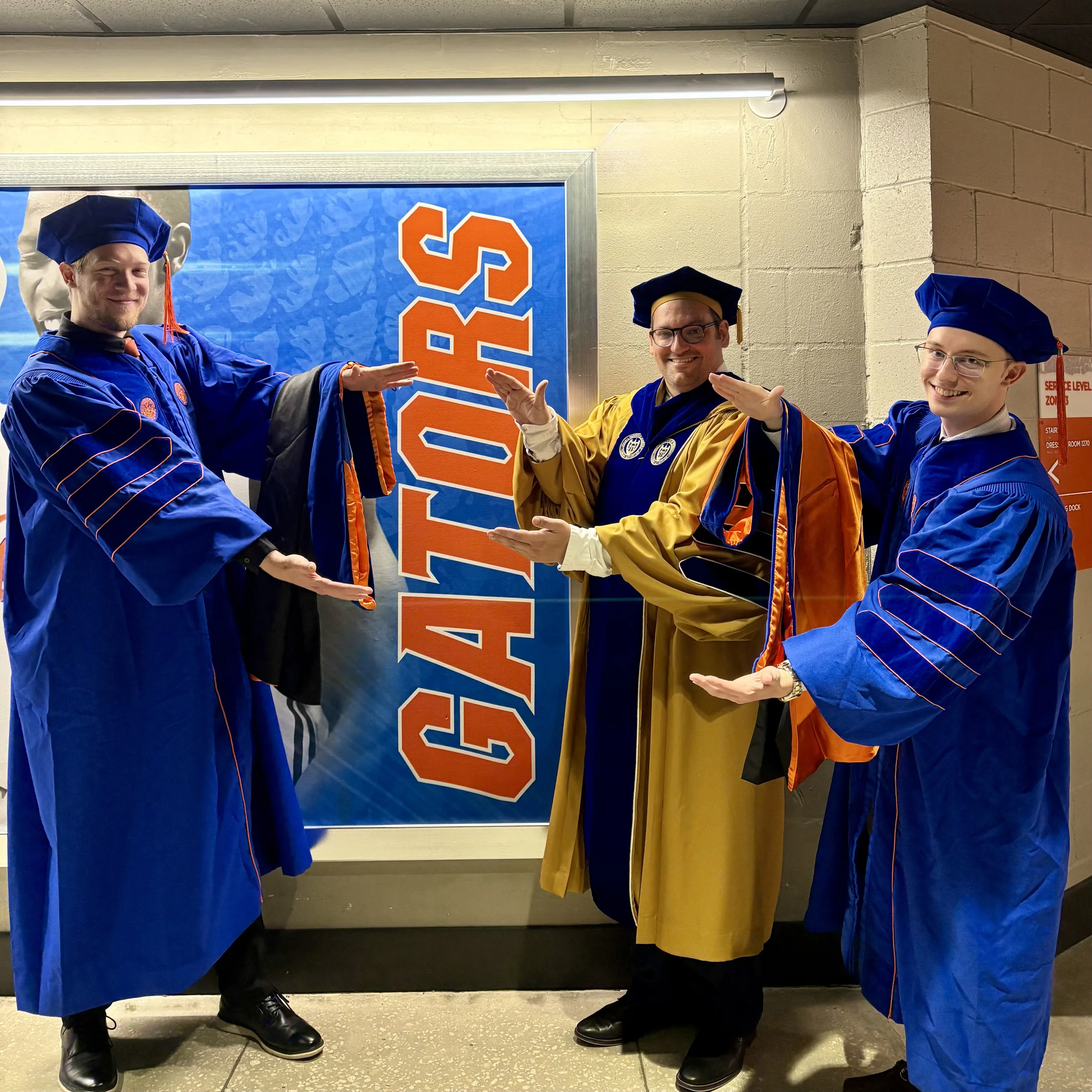
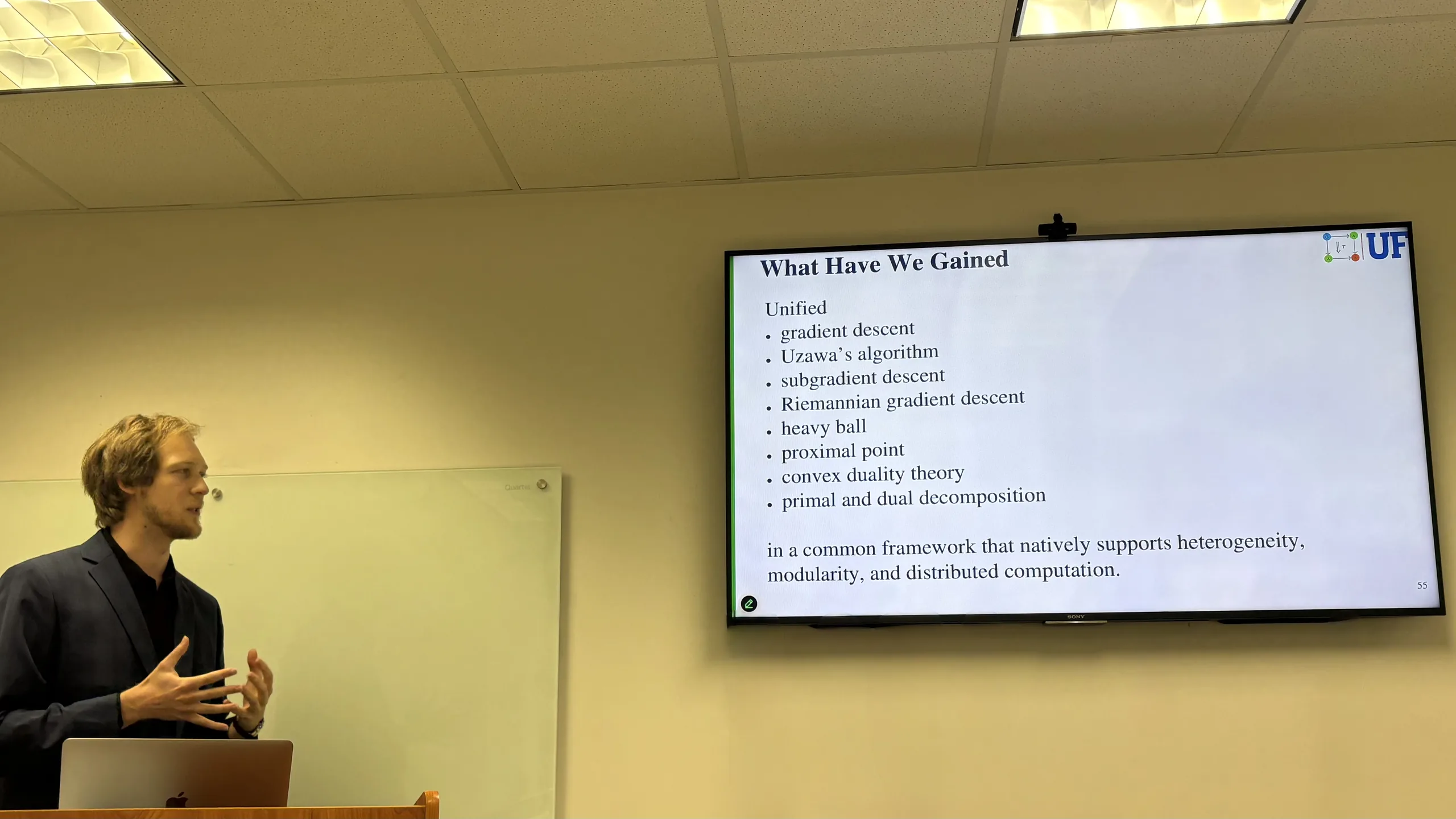
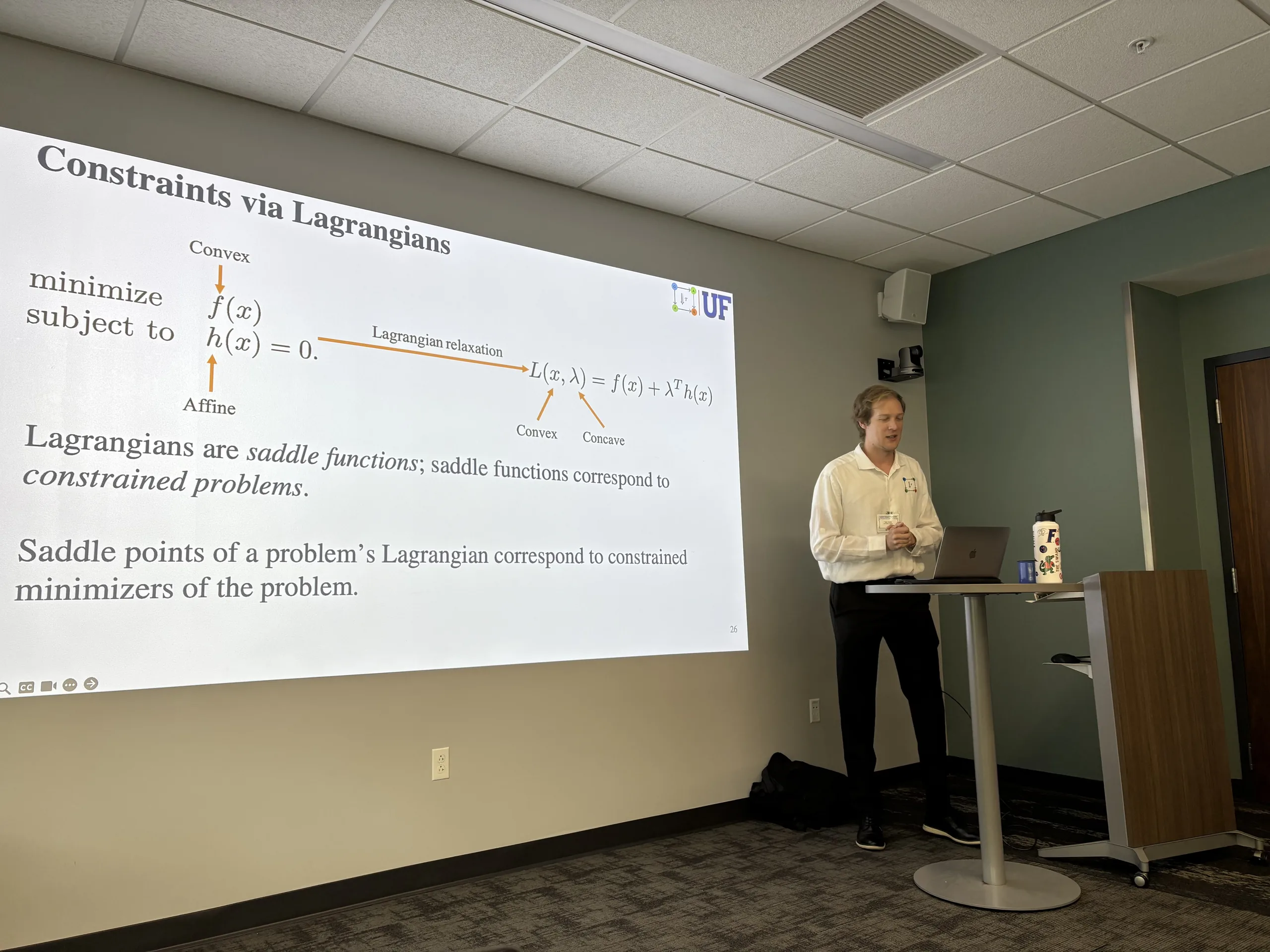
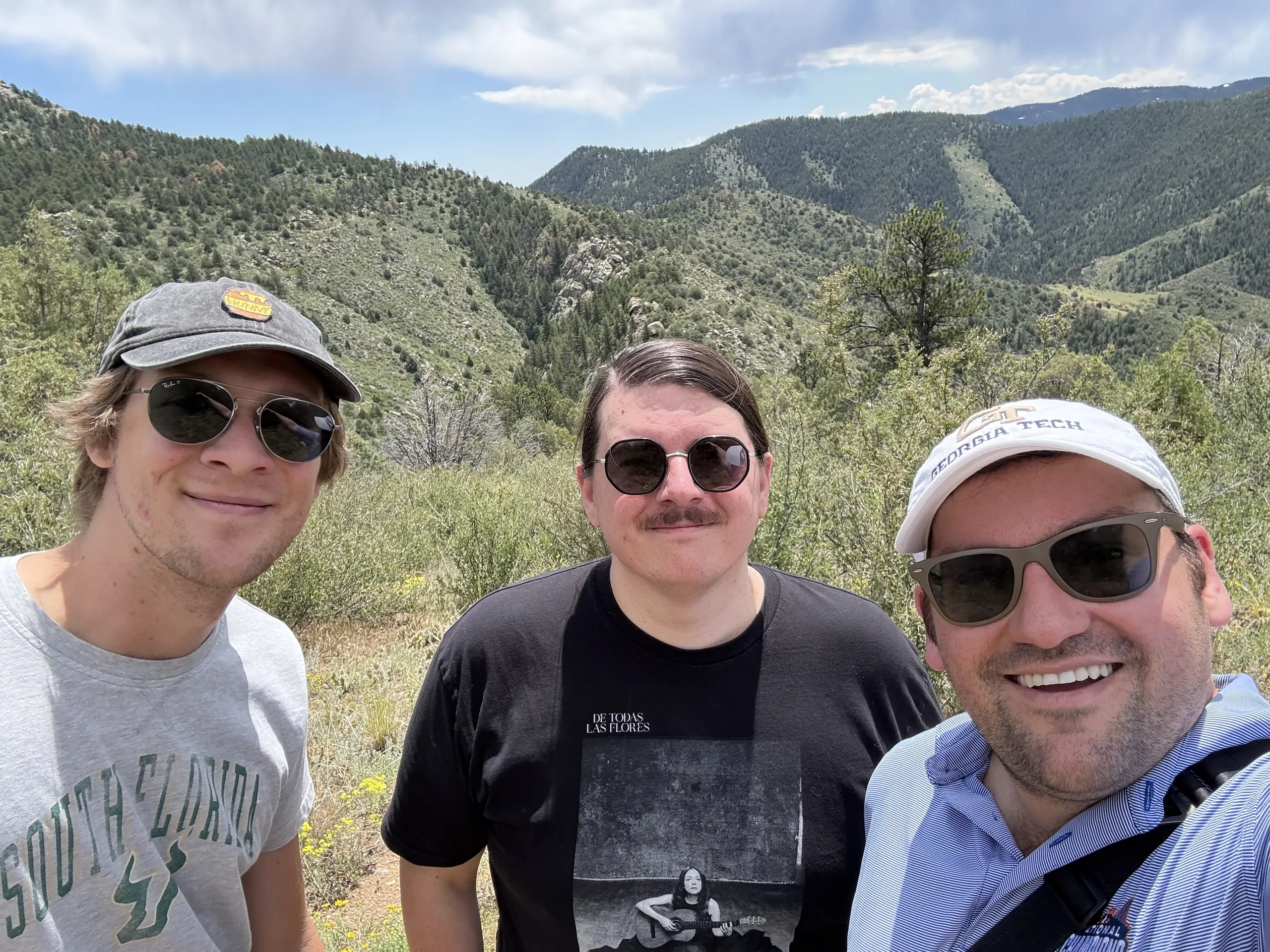
Tyler’s GraduationTyler’s DefenseGiving a keynote address at the ACT2025 conference in Gainesville, FLDuring ACC 2025 in Denver, we met with Joe Moeller from CalTech to discuss his work on categorical Lyapunov theoryTyler’s first SEC football tailgate!During his internship at AFOSR in upstate New York
Luke Morris is leading development on the CombinatorialSpaces.jl and
Decapodes.jl projects, for representing multiphysics models and automatically
generating simulations from those representations.
I am interested in problems that applied scientists face when they do any
computational work. In particular, I mean the problems of developing models
faster, and making the models themselves faster and more accurate. I lead a
couple of projects on this front:
Decapodes.jl and
CombinatorialSpaces.jl.
We use techniques from Applied Category Theory (ACT) to represent models (as
“Decapodes”) and how models compose together. These models are systems of
partial differential equations (PDEs). ACT - the “science of composition” - lets
us analyze scientific models as mathematical objects in their own right.
Catlab.jl - an ACT
programming library - enables us to write a library in an ACT-programming style,
without sacrificing performance. We use Catlab’s implementation of “C-Sets” by
specifying a small Decapode “schema”, which produces an efficient in-memory
database to store a model. Doing algebra on these models then becomes as
efficient as performing database operations. It is quite natural to interpret a
system of PDEs as a relational database, adopting the point of view that such
systems describe how physical quantities relate to one another.
Of course, when we generate simulations from these Decapodes, we need a
framework for understanding numerical methods. Otherwise, we only have an
encyclopaedia or ontology of physics equations, and nothing to “do” with them.
The Discrete Exterior Calculus (DEC) is a good fit here, since it generalizes
vector calculus, and differential operators become efficient matrix-vector
operations that we can chain together. The DEC works on any type of manifold - a
representation of space that makes sense, like a sphere, a plane, or a teapot -
and so a Decapode is not necessarily tied to any particular shape or resolution
of space. In 1 dimension, your physics make sense on a line or a circle. The
CombinatorialSpaces.jl library is where we have implemented a representation of
such spaces as “simplicial sets”, and definitions of differential operators.
Developing a library for scientific computing is best done by collaborating with
the user that you have in mind. So I lead a few collaborations with labs who
study space weather. One model simulates electron dissipation - where electrons
end up in our atmosphere as they precipitate down from space - and another is a
model for galactic cosmic ray (GCR) and solar energetic particle (SEP) transport
how particles coming from other stars or the Sun travel through our solar
system. There are applications for the weather on Earth as well, from modeling
glacier dynamics to the circulation of matter in our atmosphere.
Photos
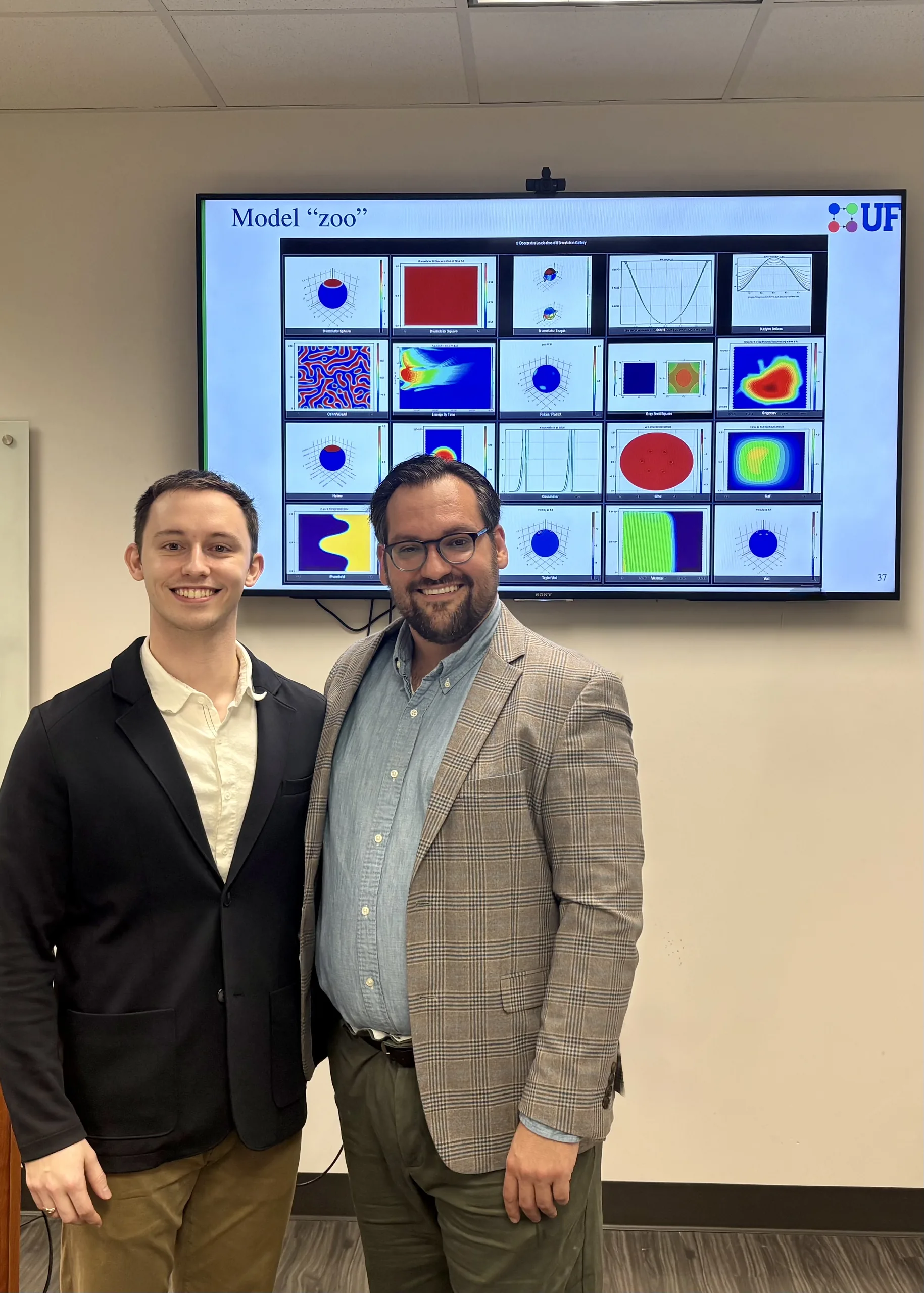
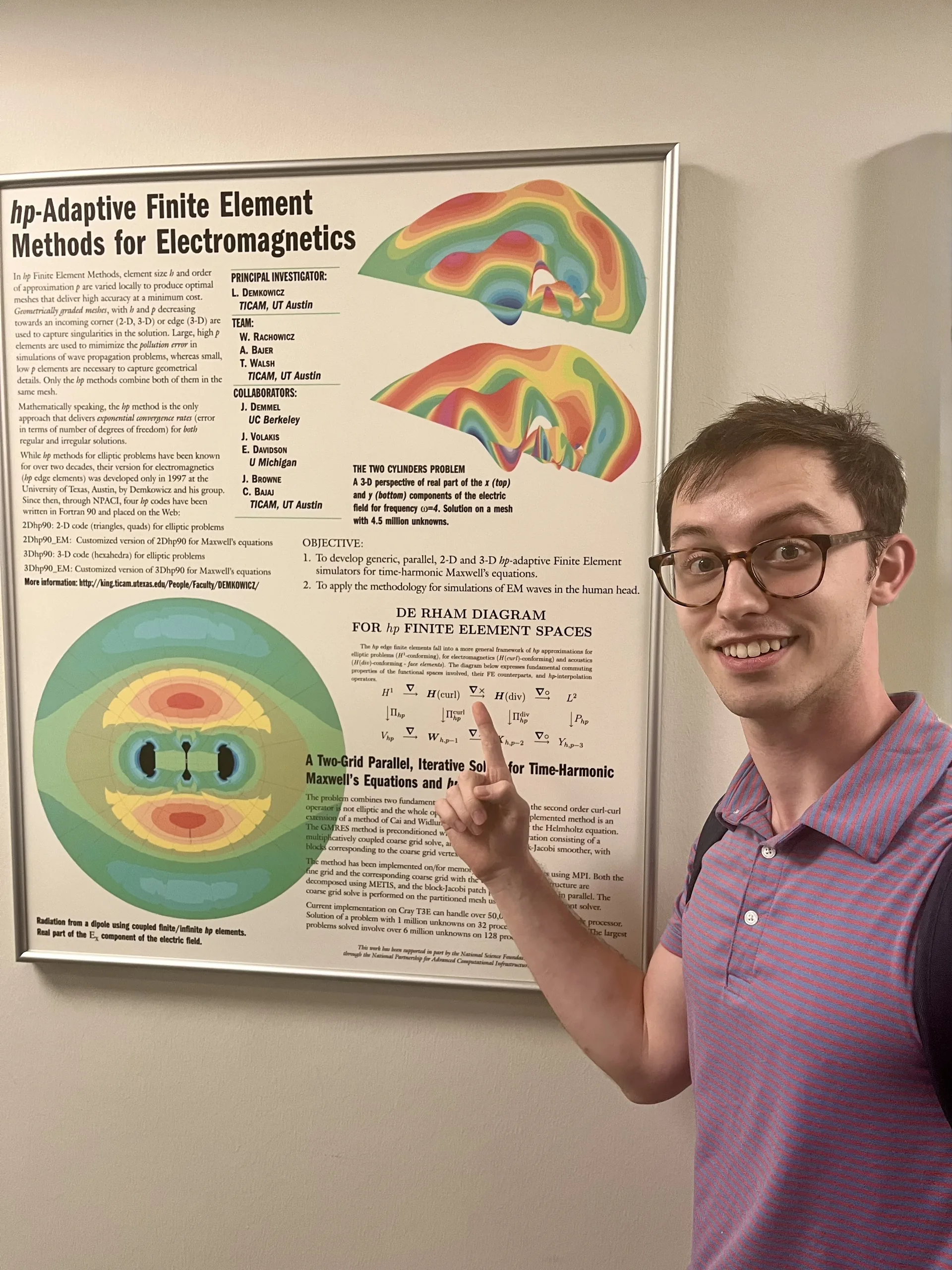
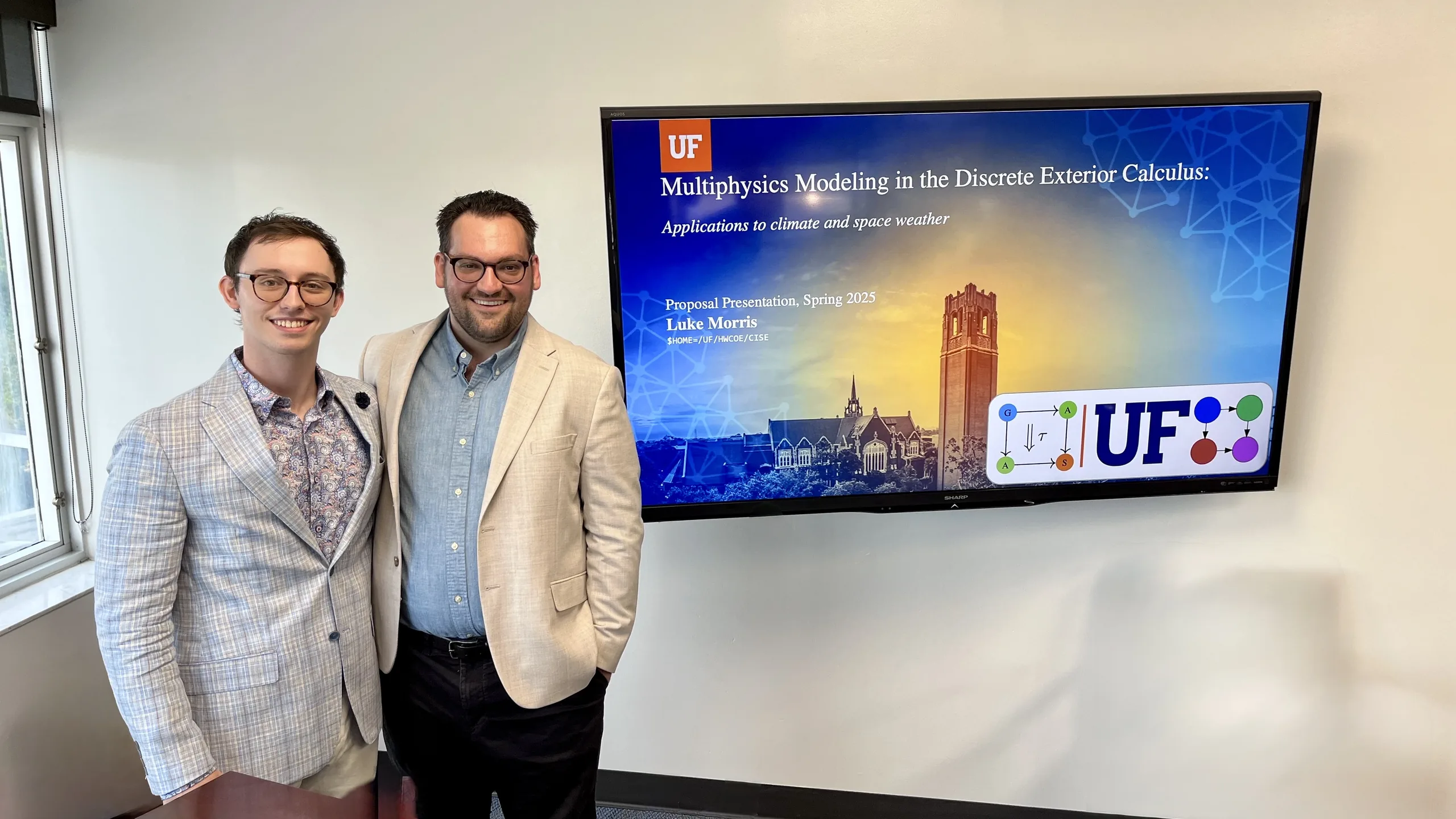
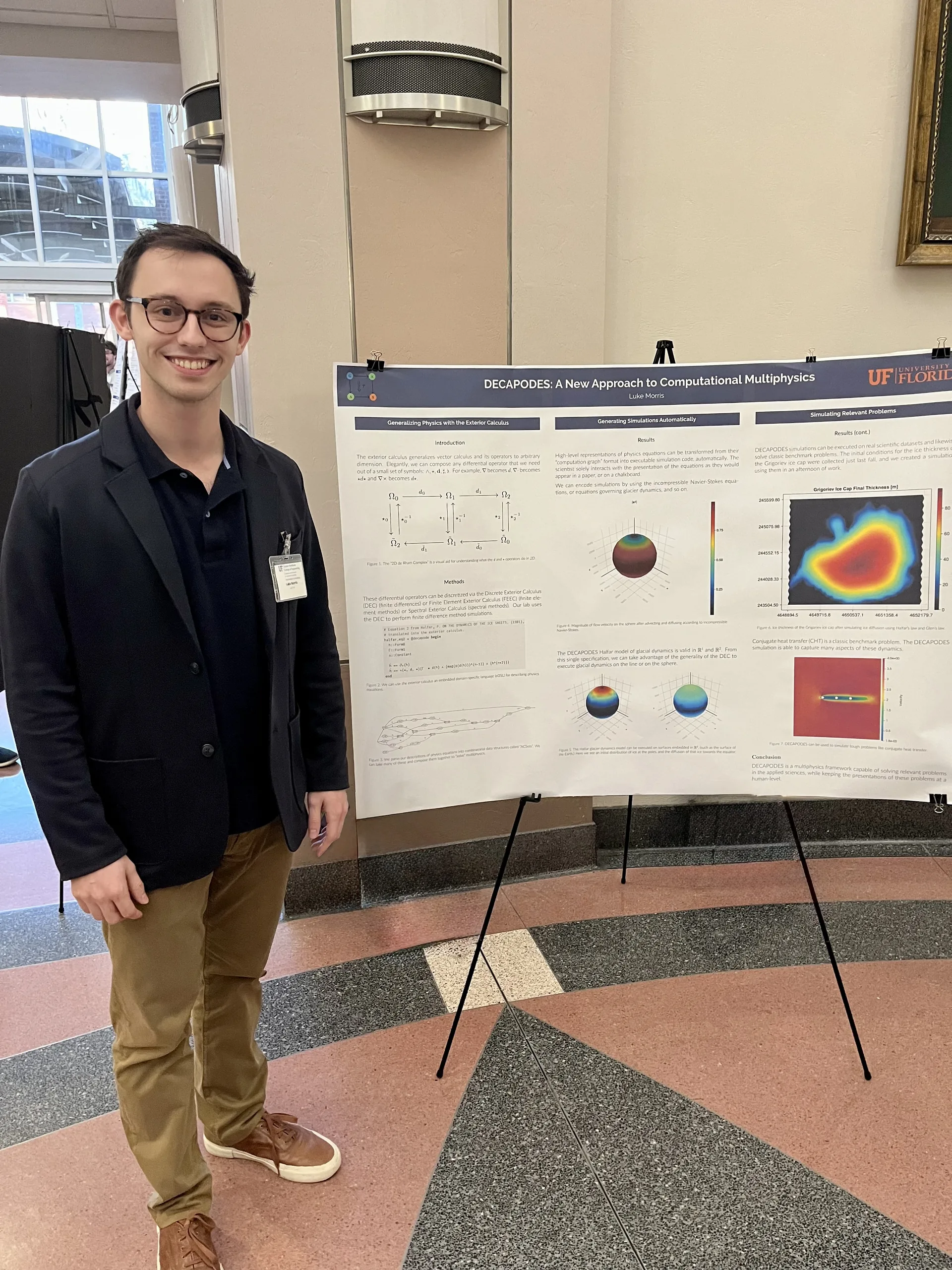
PhD DefenseASKEM Hackathon in Austin. We found a de Rahm complex in the wild!The final ASKEM Hackathon, where Luke ascended to the mountain top.PhD Qualifier ExamACT 2023 at the University of MarylandPresenting a DECAPODES poster at MAE PhD student recruitingBecoming one with the machines on a Hipergator tour.Luke’s first UF football game, still a Kentucky fan.
Trevor Gross is an undergraduate junior studying computer science affiliated
with the Florida Institute for National Security Talent Pipeline.
My research interests lie in developing and implementing new techniques to solve
existing problems. I primarily work in the AlgebraicOptimization.jl library to
improve the efficiency of distributed systems and make other engineers’ work
easier. I am a highly motivated student who aims to contribute to research and
industries worldwide.
Wilmer Leal is a postdoctoral researcher at the Computer Science Department at
the University of Florida, USA.
I am fascinated by the interplay between chemistry and mathematics, leveraging
mathematical tools to solve chemical questions and using chemical intuition to
inspire mathematical insights. My current research revolves around developing
categorical models for various flavours of compositionality in chemistry. As a
chemist, I am naturally inclined to reason and navigate through reaction
networks, making hypernetworks a particularly exciting area of study for me.
Prior to joining the University of Florida, I pursued my Ph.D. in the
Bioinformatics Group at the University of Leipzig and the Max Planck Institute
for Mathematics in the Sciences, Germany. There, I explored both mathematical
structures and vast chemical databases. This enabled me to delve into the depths
of chemical space, uncovering its secrets and unraveling the intricate history
of chemistry.
Ultimately, my goal is to advance our understanding of the rich interplay
between chemistry, mathematics, computer science and history of science.
Photos
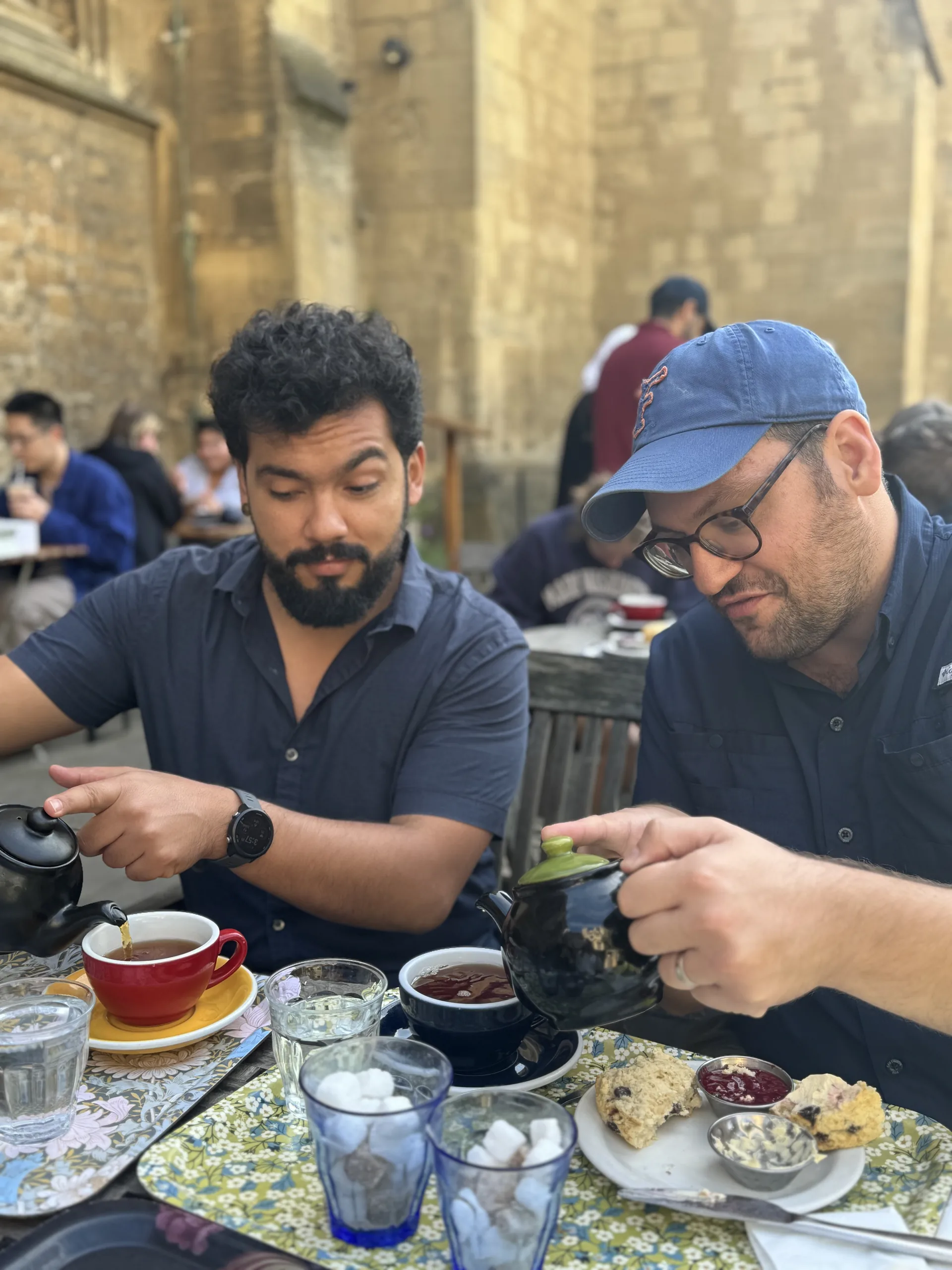
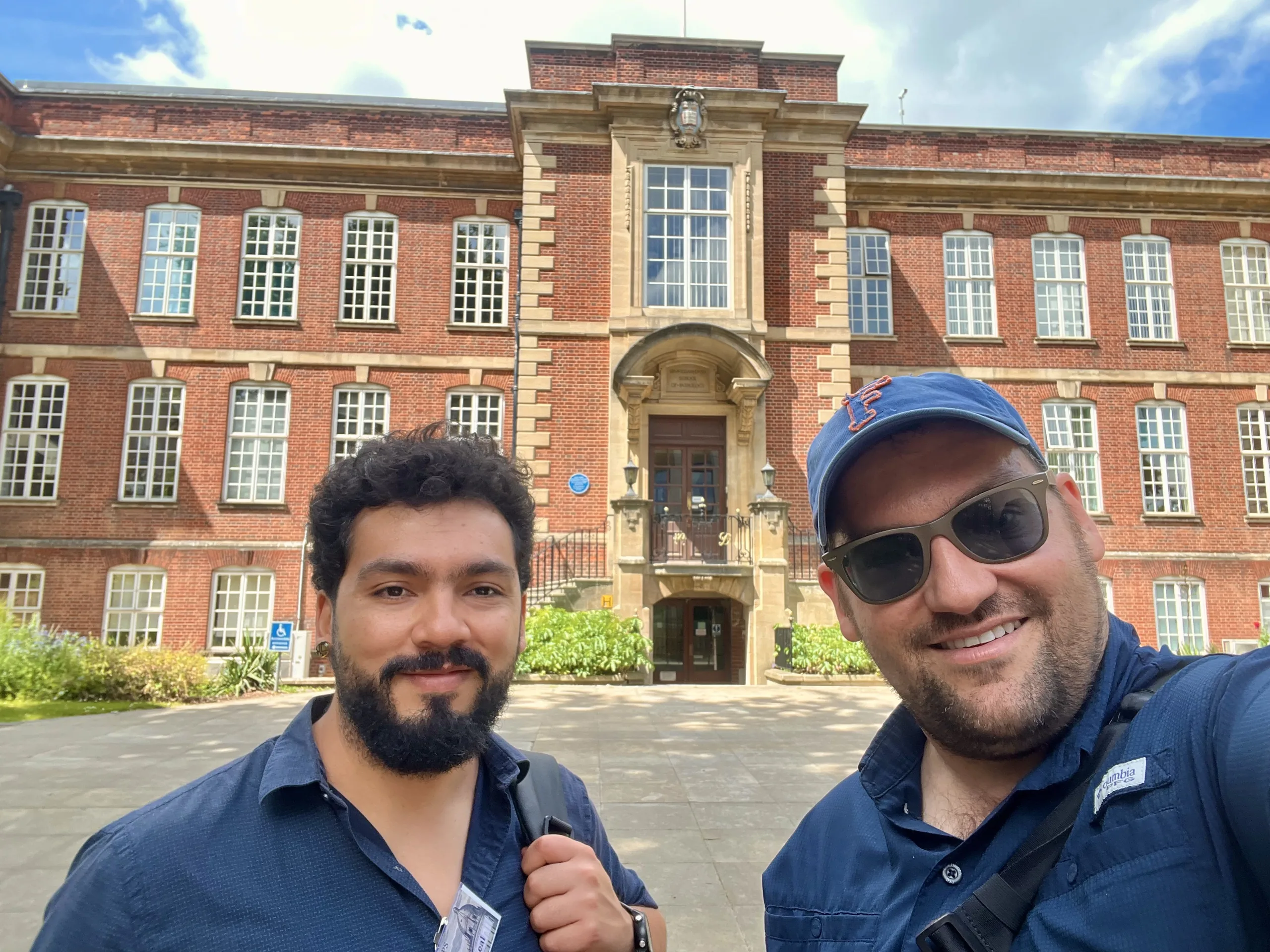
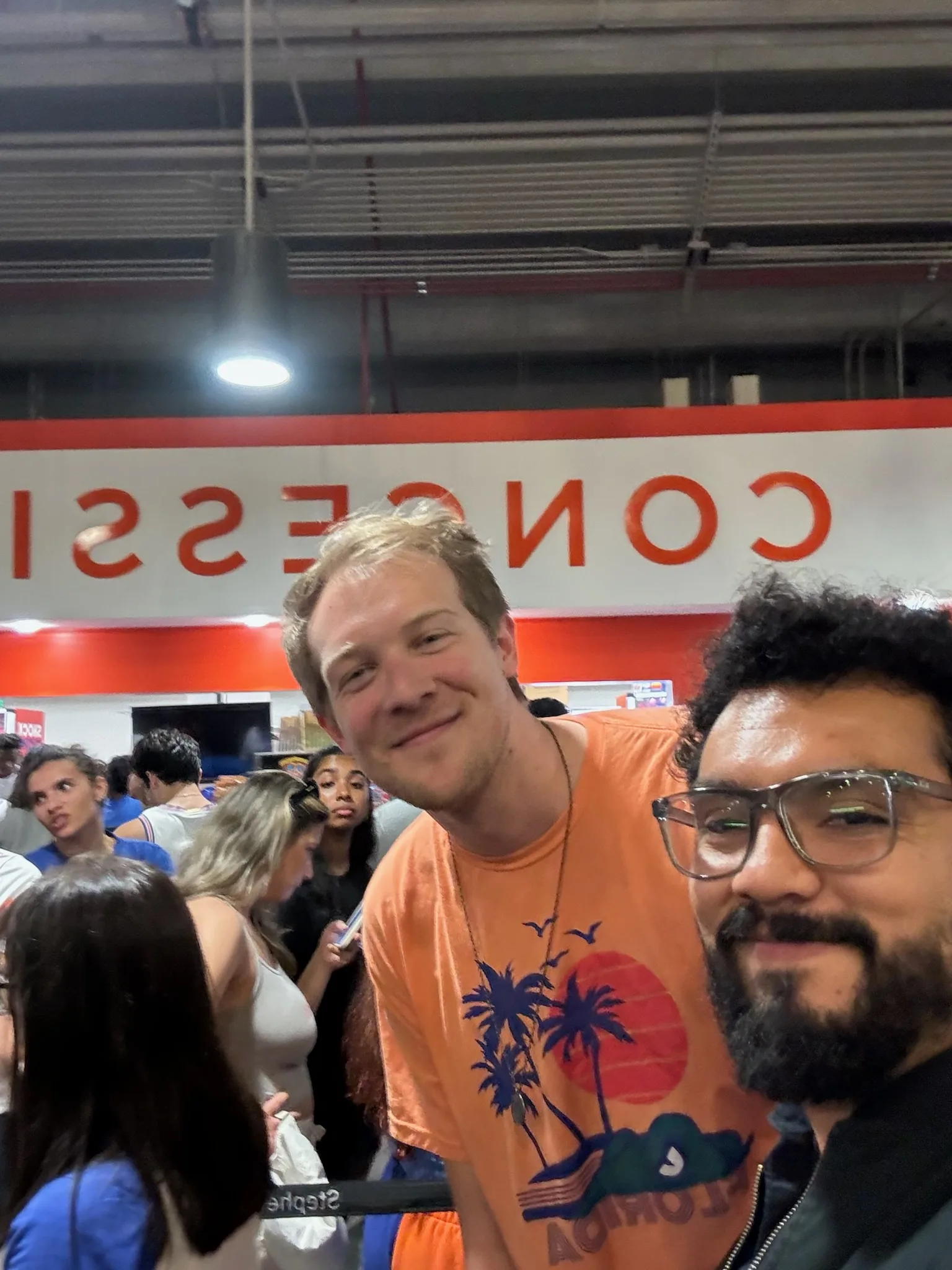
Enjoying a tea in Oxford during the ACT conferenceA historical place for chemistsWatching the Gators win the 2025 Basketball National Championship
Benjamin Merlin Bumpus was a faculty research scientist and led the algorithms
subproject within the GATAS Lab.
In 2023 he accepted a professorship at the Institute of Mathematics, Statistics,
and Computer Science (IME) at the University of São Paulo (USP) in Brazil, where
he now heads the CombTheta research group and the CUÍCA (Categorical
Understanding in Computation and Algorithms) lab. His move to USP has expanded
his collaborative network across South America and Europe, resulting in joint
projects on categorical methods in computational complexity and graph theory.
Recent highlights including the Brazilian Category Theory
Conference
and our paper on temporal data with
sheaves
being published.
Ben’s research focuses on the emergence of complexity and its relationship to
compositionality—the principle that the structure or meaning of a whole
depends on that of its parts. He investigates computational complexity,
combinatorial explosion, and their connections to graph structure theory,
parameterized complexity, and finite model theory, using category theory to
relate and generalize tools across these areas.
Ben introduced sheaf theory to the GATAS Lab, initially motivated by
characterizing fixed-parameter tractable algorithms and dynamic programming
categorically. This work deepened the group’s understanding of local-to-global
alignment in compositional computation, extending the earlier focus on how
monoidal functors interact with colimits.
Photos
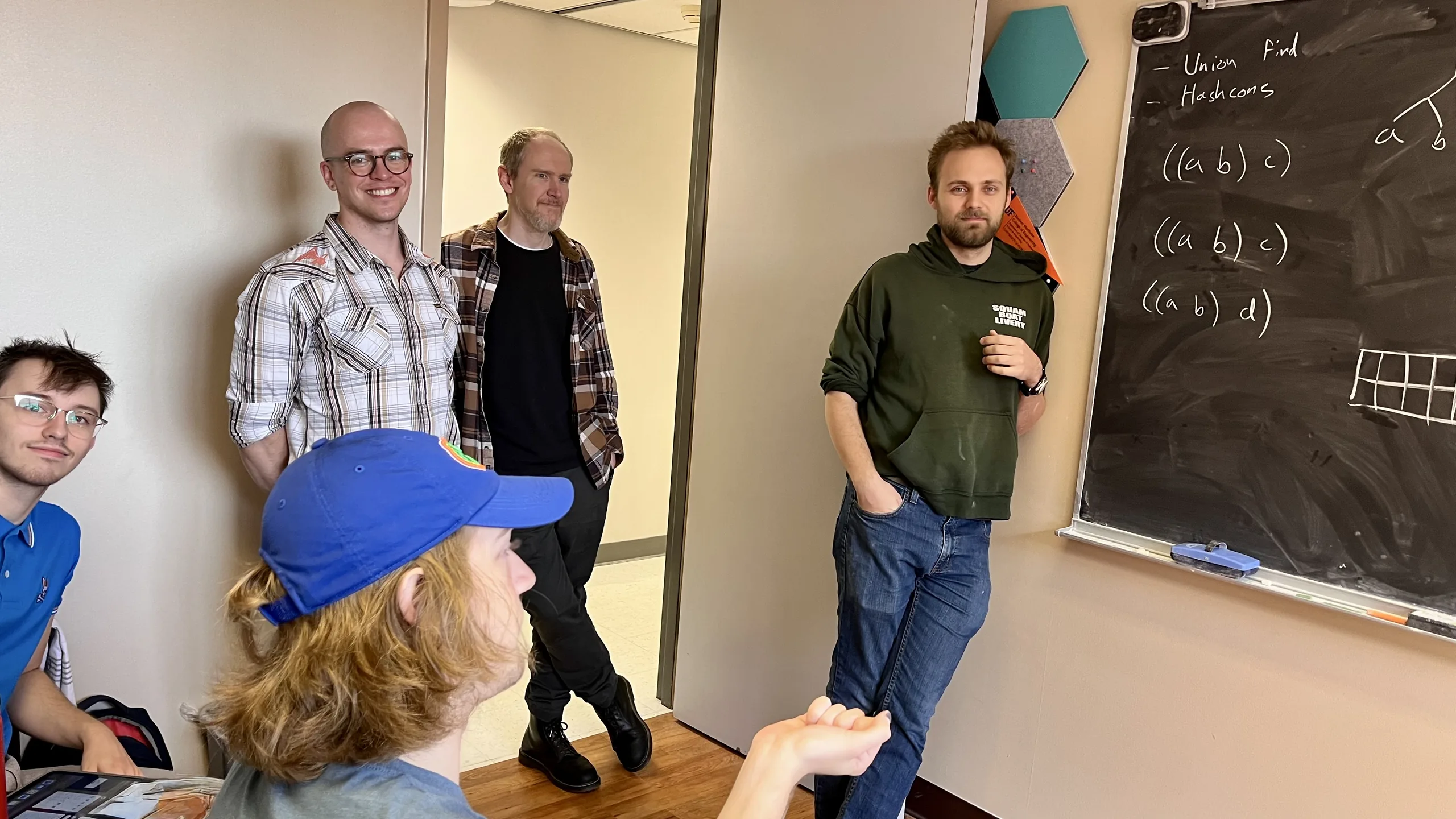
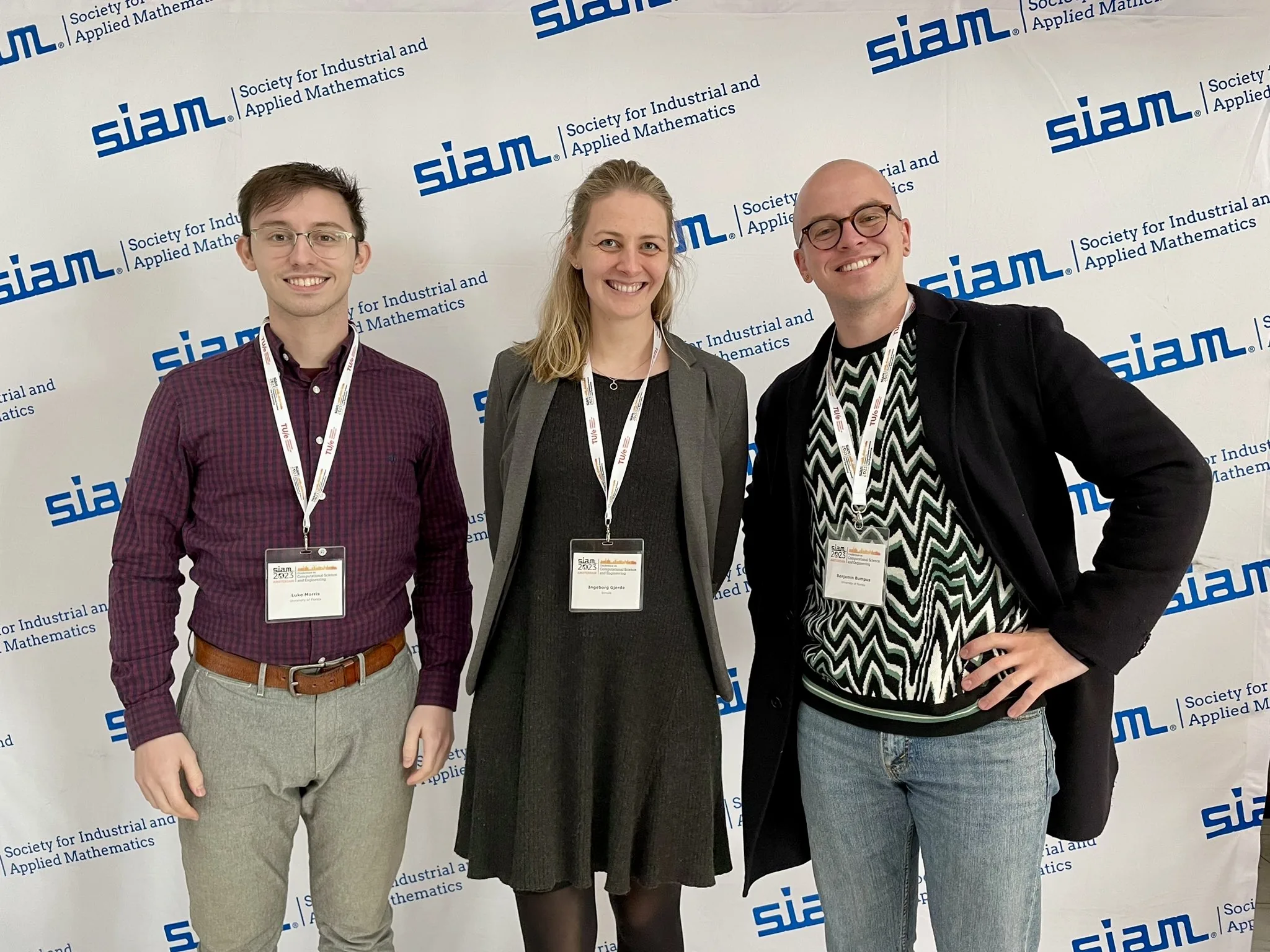
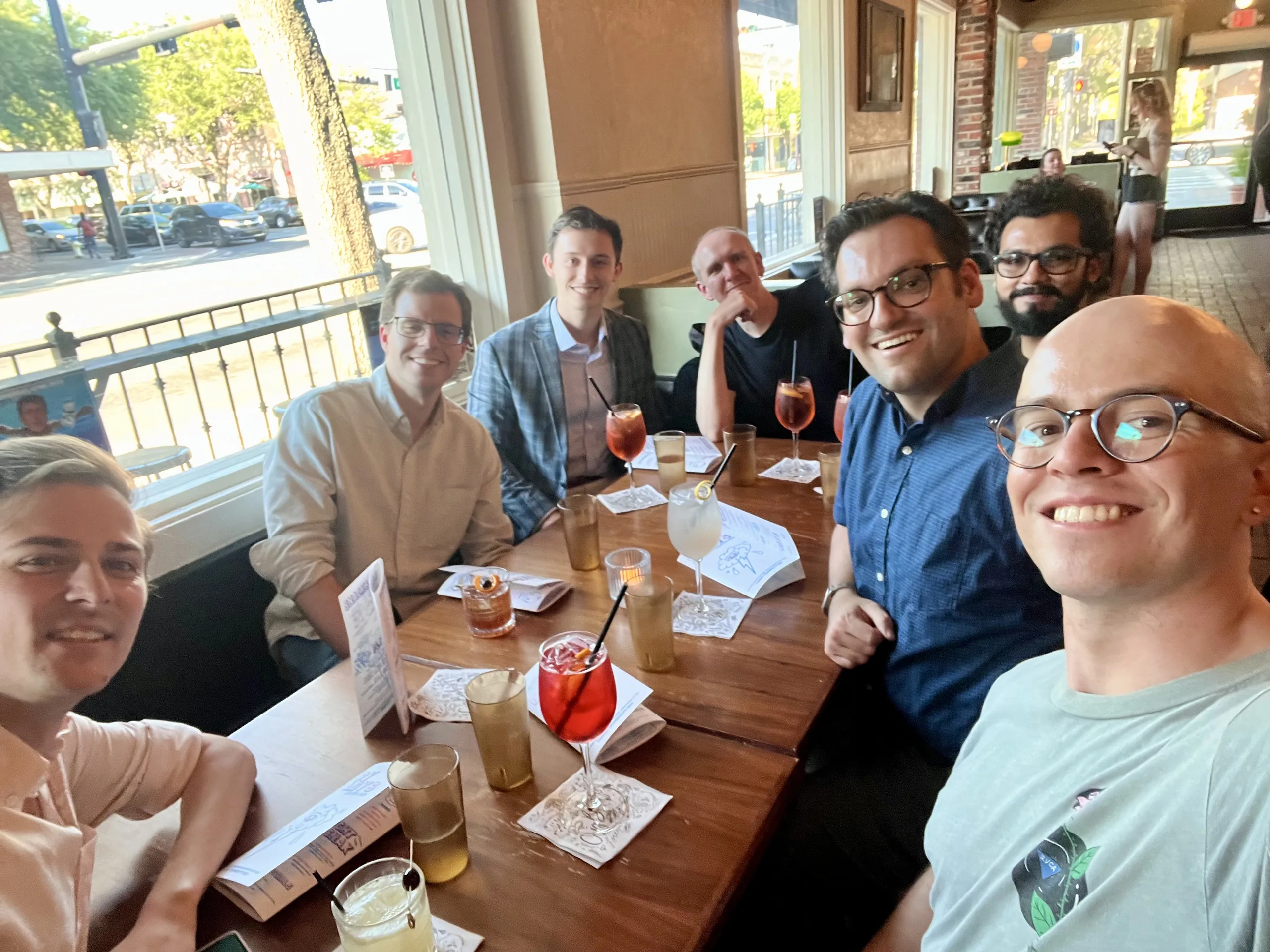
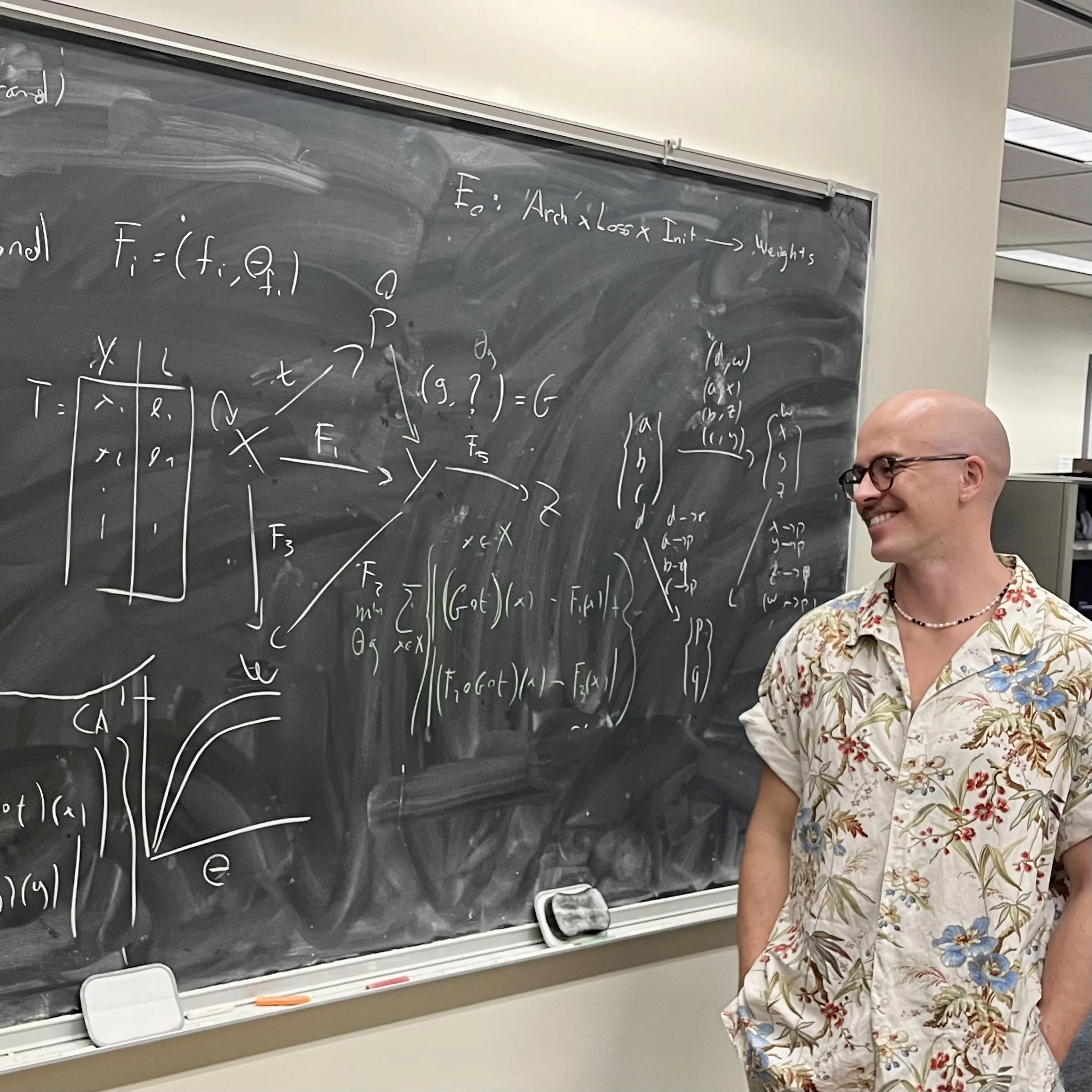
Benjamin Merlin Bumpus summons a presheaf.When Owen came to visit and ideated about hierarchical data structures that eventually became InterTypes.jlAttending the SIAM CSE meeting in Amsterdam 2023 with Ingeborg Gjerde and Luke MorrisLab dinner at Cry Baby’sTeaching diagrammatic reasoning in the labCaught in the act of doing Sheaf Theory while we were still a Category Theory lab
Patrick Stokes
Program
CISE
Degree
PhD
Status
Qualifying
Lab member since
2021
Patrick Stokes was a faculty research scientist in the GATAS lab.
My background is in signal processing, statistical modeling, and system
identification in computational neuroscience. My research interest is applying
category theory to develop structures and algorithms for robust inference and
identification of complex, high-dimensional, multi-scale, and stochastic
systems.
Taylor Frederick
Taylor Frederick is a research scientist who likes math.