Multi-Agent Coordination with Cellular Sheaves
A cellular sheaf assigns data to the agents and communication links of a fleet, together with the maps that say when neighbouring agents agree. Coordination then stops being a controller to be designed and becomes a problem to be solved: the coordinated state is the harmonic extension of the sheaf Laplacian, the configuration on which every local agreement condition holds at once.
That reformulation is what the project buys. A moving target changes only the right-hand side of a linear system, so tracking, formation control, and consensus are the same computation under different data. Heterogeneous agents, which are awkward for a hand-built controller, are just different stalks over different vertices.
The work runs in two directions. One asks what can be posed this way – multi-target tracking, safety constraints expressed as control barrier functions, and coordination laws that tolerate agents updating at their own rates. The other asks how to actually solve it: factoring the sheaf Laplacian once and cutting it along its elimination tree turns each control step into a short exchange of messages, so no machine ever holds the whole problem and the answer stays exact rather than approximate.
Project team
| Photo | Name | Member since | Degree | Program |
|---|---|---|---|---|
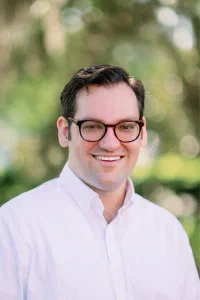 | James Fairbanks | 2021 | PhD | Computational Science and Engineering |
 | Itay Kadosh | 2026 | PhD | MAE |
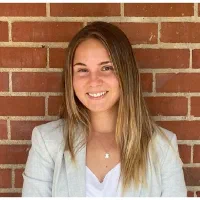 | Joana Bou Barcelo | 2024 | PhD | MAE |
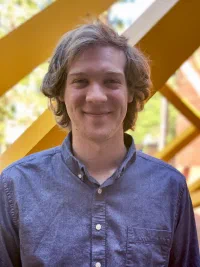 | Tyler Hanks | 2021 | PhD | CISE |