The GATAS Lab
University of Florida
Applied category theory for scientific computing
We turn the compositional structure mathematicians write down into software that scientists and engineers can actually run.
The GATAS (Generalized Algebraic Techniques Advancing Science) laboratory uses applied category theory to develop novel approaches to scientific computing. We are domain-agnostic, solving problems in dynamics, physics, biology, the life sciences, and industrial engineering. Our group works closely with Evan Patterson’s research group at the Topos Institute to maintain and develop the AlgebraicJulia software ecosystem.
For a tour of what we work on and how the pieces fit together, see this research overview talk.
Philosophy
Scientists develop simulations by translating scientific concepts into mathematical models, and then embodying those models in software. We seek to automate this process using category theory. Category theory is a mathematical language rich enough in abstraction to represent any scientific concept, yet pliable enough to manipulate efficiently with a computer. The software in AlgebraicJulia encodes a number of these abstractions; with it, scientists can build powerful, robust, and bespoke scientific models without starting from scratch in each domain.
Applied Category Theory 2025
The GATAS Lab hosted the 8th International Conference on Applied Category Theory here at UF.
Latest news
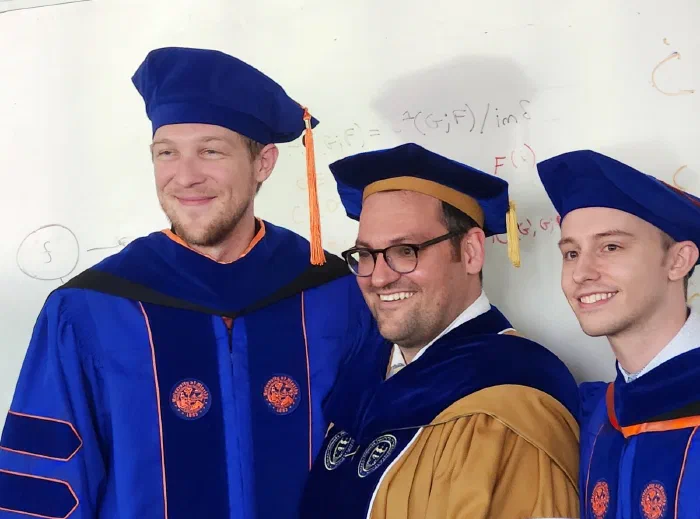
Tyler Hanks and Luke Morris receive their PhDs
The lab’s first two PhD graduates, both hooded in May 2026.
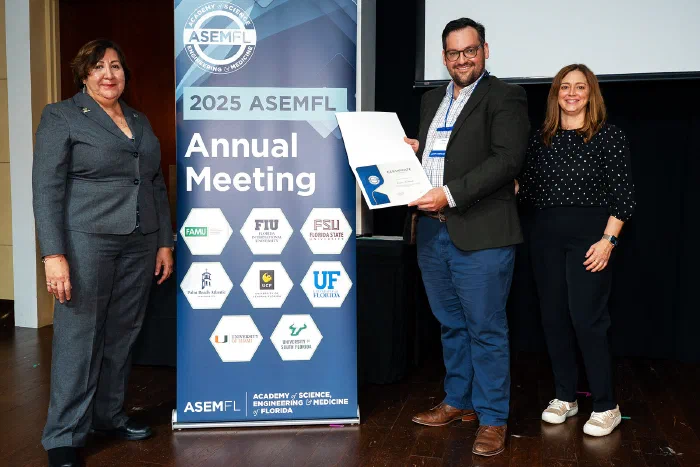
James Fairbanks named an ASEMFL Rising Star
The Academy of Science, Engineering and Medicine of Florida recognized James Fairbanks at its 2025 Annual Meeting.
Four lab members spend the summer at national labs and Georgia Tech
Andersen Wall at AFRL, Joana Bou Barcelo and Liam Kunzendorf at Georgia Tech, and George Rauta at ARL Adelphi.
Explore the lab
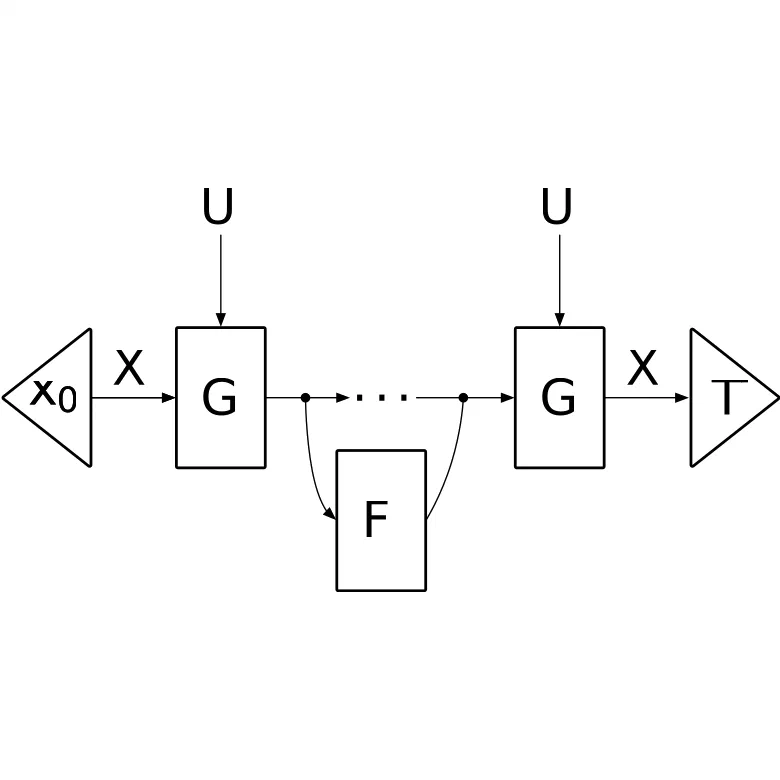
Research
Our projects, the papers they produced, and the talks we gave about them.
Software
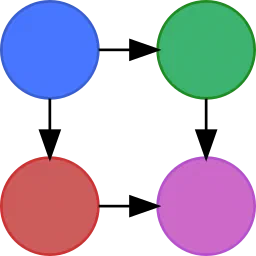
The Julia packages the lab builds and maintains, part of the AlgebraicJulia ecosystem.
Members
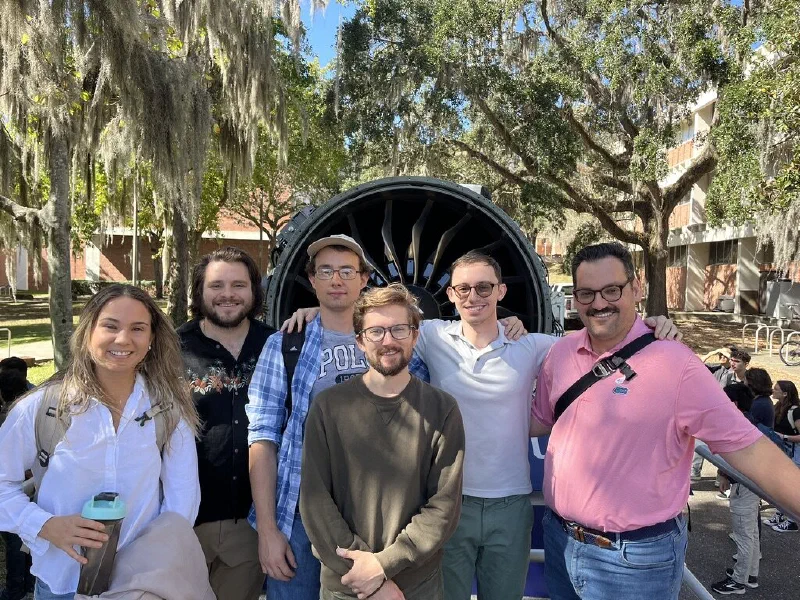
The people of the GATAS Lab — current members, alumni, and mentees.
Join the Lab
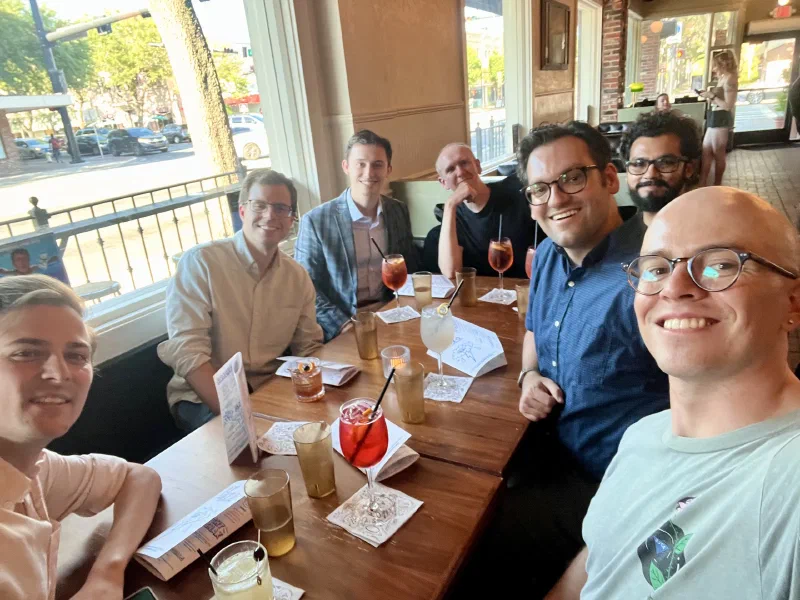
We are accepting PhD students, postdocs, research scientists, and undergraduate researchers.
Sponsors
The federal agencies whose grants and contracts support the lab.